Detailed features
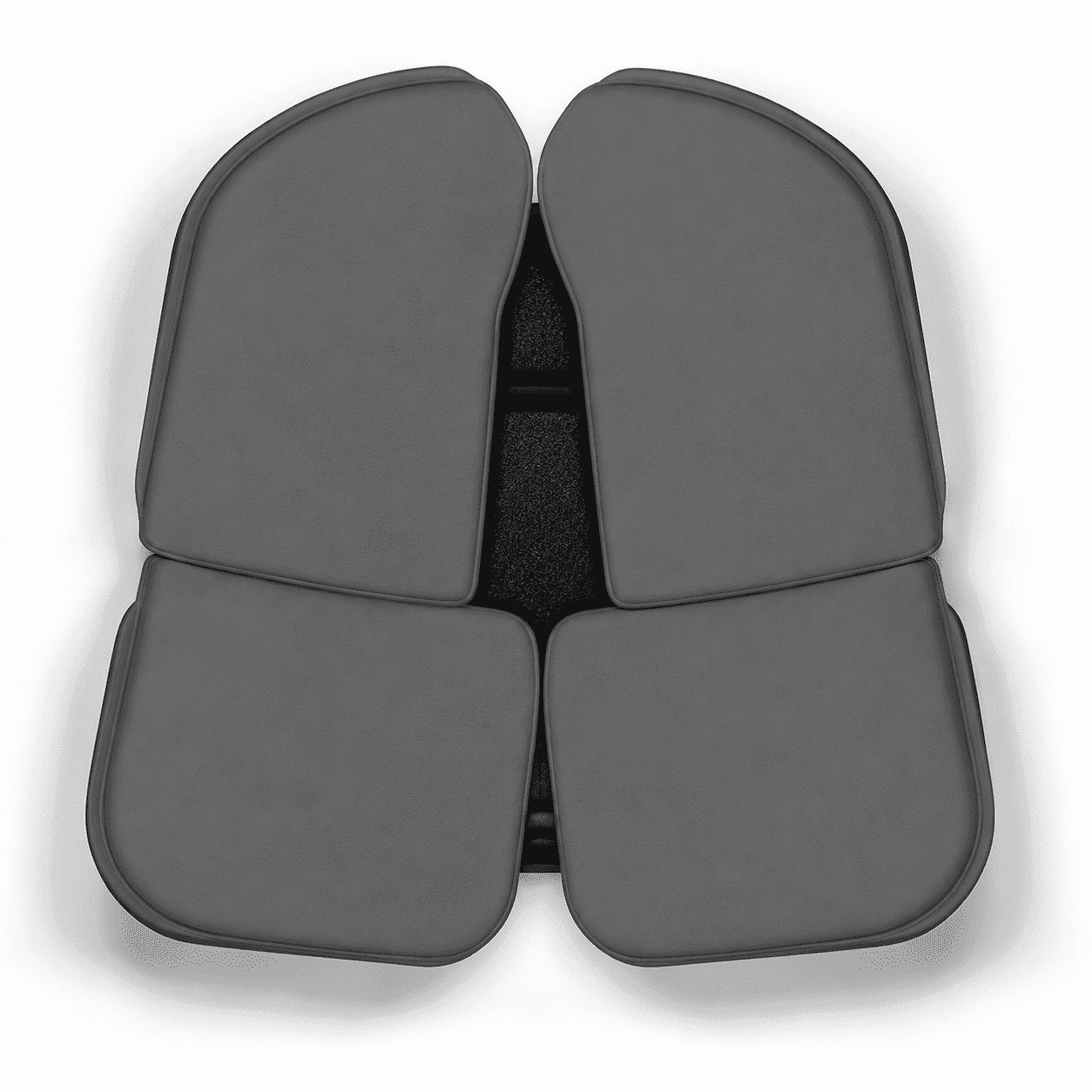
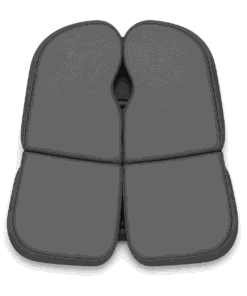
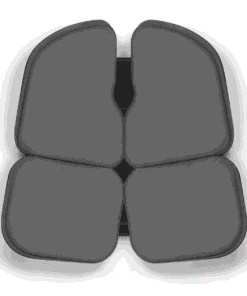
The APORIA® Périnée cushion is balanced dynamic seating with independent supports and a central cut-out. Its curved base allows general rocking in every direction (360°). Mounted on this base, four independent supports (two elongated ones at the back, under the buttocks; two square ones at the front, under the thighs) follow this movement; each one also has its own 360° mobility on an elastomer ball joint, with limited travel.
This version may be considered when pressure in the center triggers or increases symptoms and the sit bones tolerate pressure; if the sit bones are clearly painful, check that the central cut-out does not increase the load on them.
| Feature | Value |
|---|---|
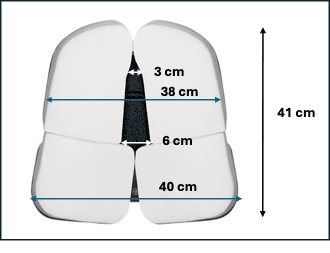
| Cut-out | 3 cm median rear notch, widening into a 6 cm central cut-out between the supports |
| Dimensions | 41 cm deep × 40 cm wide at the front (38 cm at the back) × 12 cm high; 1.7 kg |
| Firmness options | Balanced Comfort (dynamic support) or Enveloping Comfort (firm base and 2 cm viscoelastic layer, cocoon effect); anti-bottoming layer in both versions |
| Adjustment | Two wedges included to adjust the tilt |
| Cover | Removable, machine washable |
Trial and purchase: 30-day trial; free returns from anywhere in the European Union; your choice of an exchange (version and/or firmness; shipping of the new product paid by the customer, new 15-day trial) or a full refund; personalized help getting started. Trial, return and refund conditions
When it may help and points to watch
Situations in which this version may be relevant
- Perineal, pudendal or pelvic pain made worse by sitting, when pressure in the center triggers or increases it.
- Burning, electric-shock-like sensations or hypersensitivity to contact with the seat, in the center.
- Sitting intolerance that increases with time despite a cut-out, when a fixed position seems to contribute: the seat is designed to accompany the body’s small adjustments.
- Pain that is stronger on one side: each support responds separately, which allows a different load on the left and on the right.
- Protective tightening of the pelvic muscles kept going by the effort of holding yourself up: the balance of the whole seat is designed to limit this effort.
Points to watch
- Clearly painful sit bones: the sit bones remain supported on either side of the cut-out; check that it does not increase the load on them. If the perineum does not need to be relieved, Aporia Standard provides more continuous support.
- Pain at the back: check whether it is direct pressure under the tailbone (coccyx) that triggers it; if so, a targeted coccyx cut-out (Aporia Coccyx) may be a better match.
- Pressure poorly tolerated under the buttocks or the back of the thighs: the central cut-out shifts the load onto these areas; the selection guide helps you check.
- Small movements that bring back the pain at first: start with short periods and adjust the firmness and the wedges; that is what the 30-day trial is for.
- Symptoms along a large part of the midline, from the pubic bone to the tailbone: a central cut-out may leave part of this line in contact; the continuous center channel of Aporia Canyon can then be considered, if the buttocks and thighs tolerate pressure.
- Several areas, or you are not sure: the selection guide asks every solution the same questions.
These guidelines are not medical contraindications. A diagnosis alone is not enough to choose a version: what matters is the area that does not tolerate pressure and the way sitting affects your symptoms. If in doubt, ask your doctor for advice.
What the seat does
- Central cut-out: it removes seat contact under the perineum, while the sit bones, the sides of the buttocks and the upper thighs remain supported.
- Independent supports: each side responds separately and each half of the pelvis is carried separately; a different load on the left and on the right can be accommodated without sitting crooked.
- Balance of the whole seat: the seat is designed to limit the effort needed to hold yourself up when sitting, one of the possible sources of pelvic muscle tightening.
- Micro-movements: you initiate the movement; the seat accompanies it. It does not move the pelvis on its own.
→ What is balanced dynamic seating with independent supports? · How does the Aporia seat work?
What has been evaluated
- Pelvi-Seat study, Nantes University Hospital, 2023 (user satisfaction study): 78% of respondents ranked one of the two APORIA® seats as their first preference (43 out of 55); the other 12 preferred one of the two standard chairs tested. Read the report
- Kept after the trial: 85% of cushions are kept at the end of the 30-day trial.
- Patent: design protected by French patent FR 3 140 745 B1; applications published in Europe (EP 4 604 808) and in the United States (US 2026/0144378 A1).
Aporia® is not a medical device: it does not treat any condition and does not replace medical advice.
Frequently asked questions
What is the difference between a U-shaped cushion and the Aporia Périnée? Both remove pressure in the center. A conventional U-shaped cushion has no independent articulated supports. The Aporia Périnée adds four independent supports on a base that tilts: each side responds separately and the seat accompanies the body’s small adjustments. The selection guide compares the two using the same questions.
Is the Aporia Périnée suitable if my sit bones hurt? It depends on which area needs to stay out of contact and on how well the sit bones tolerate pressure. The Périnée version keeps the sit bones supported, on either side of the central cut-out. If they are painful, check that the cut-out does not concentrate the load on them. If the perineum does not need to be relieved, the Standard version may be preferable.
How long can I sit with this cushion? It depends on each person and on the intensity of the symptoms; no duration can be guaranteed. Start with short periods, increase them gradually, and adjust the firmness and the wedges. The 30-day trial is there to find your settings and judge your sitting tolerance.
Does the cushion move on its own? No. The seat has no motor and does not move the pelvis on its own. You initiate the movement; the curved base and the four supports on ball joints accompany it, with limited travel, while preserving the balance of the whole seat.
Can I try it before buying? Yes. You have a 30-day trial. Returns are free from anywhere in the European Union, and you choose between an exchange (version and/or firmness) and a full refund. For an exchange, shipping of the new product is at your expense and the product you receive gets a new 15-day trial. 85% of cushions are kept at the end of the 30-day trial.
Customer reviews
Reviews translated from French.
- “It goes everywhere with me. […] Aporia® is the only seat that allowed me to enjoy shared meals at the table again, and to regain my independence by driving again…” – Christelle A., member of the AINP (French pudendal neuralgia patient association)
- “The Périnée cushion […] allowed me to eat sitting down, do DIY projects, and above all get my independence back by being able to drive.” – Béatrice D.
The Aporia® world on video (in French)
Vanessa
A nurse manager, she shares her experience of the suffering caused by coccydynia, a disabling condition she has been living with for 5 years.
Christelle
Christelle, one of our first customers, shares her journey with pudendal neuralgia and cluneal neuralgia, two painful conditions that made sitting unbearable for her.
Pierre Ivaldi
Physiotherapist. The experience of a professional specializing in back problems and spinal pain.